
What Is Content Optimization? A Practical Guide to Improving SEO Content
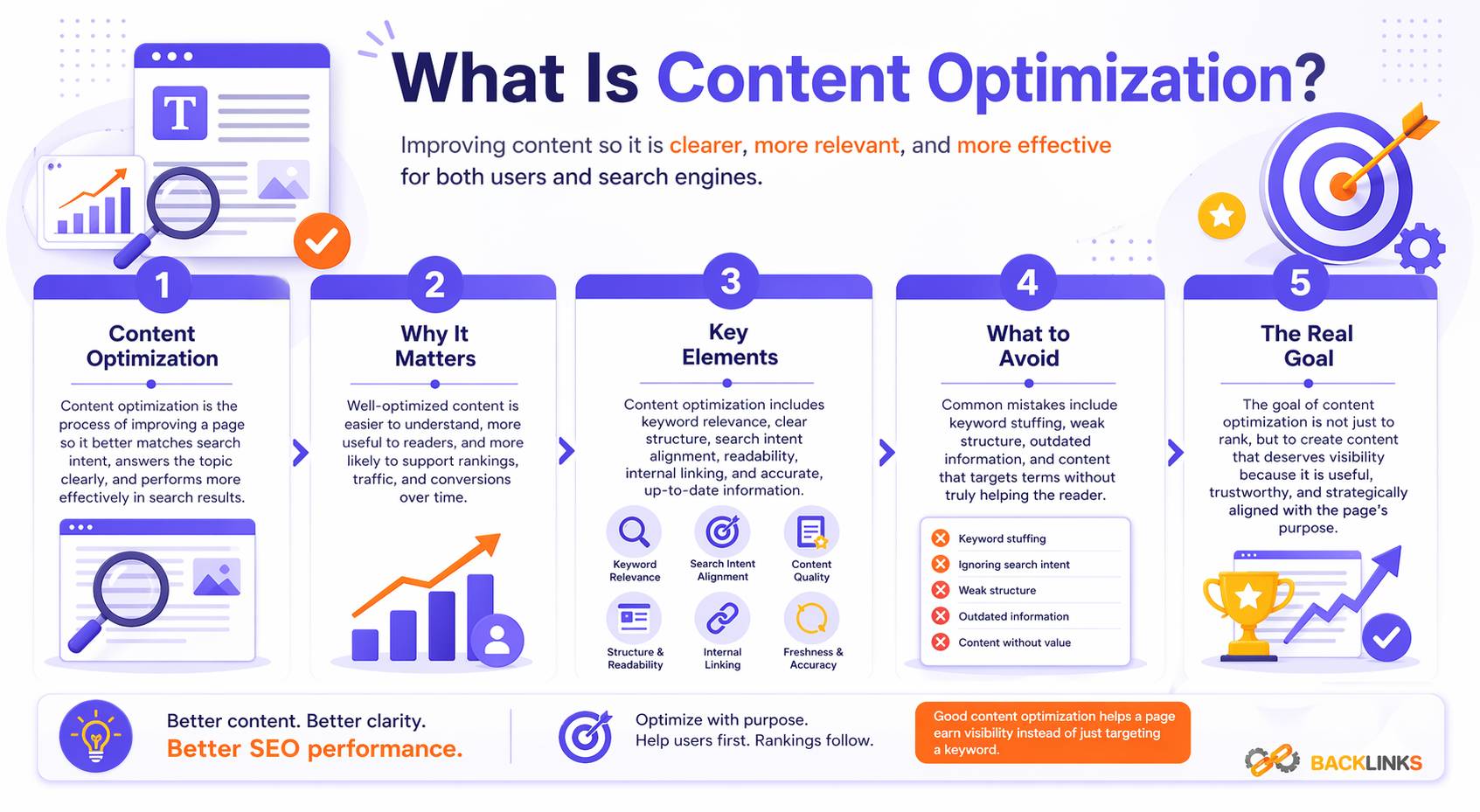
Content optimization is the process of improving content so it performs better in search results and delivers more value to readers. In simple terms, it means making a page more relevant, more useful, and easier for both search engines and users to understand.
That sounds straightforward, but in practice, content optimization is often misunderstood. Many people assume it only means adding keywords to a page. That is only a small part of it. Real content optimization involves aligning a page with search intent, improving structure, strengthening relevance, covering the topic properly, and making sure the content supports a clear business goal.
For businesses investing in SEO, content optimization matters because publishing a page is not enough. If the page does not match what users are looking for, lacks depth, or is difficult to navigate, it is unlikely to perform well. Optimized content gives your website a better chance of ranking, attracting qualified traffic, and converting visitors into leads or customers over time.
What Is Content Optimization
Content optimization is the process of refining content so it is more effective for organic search and more useful for the audience it is meant to reach.
In practical terms, that usually means improving areas such as:
- topic relevance
- keyword targeting
- heading structure
- readability
- internal linking
- search intent alignment
- freshness and accuracy
- conversion pathways
A well-optimized page is not just written around a target keyword. It is designed to satisfy the reason behind the search. It helps the user get the answer they need, and it does so in a format that is clear, credible, and easy to engage with.
For example, if someone searches for what is content optimization, they are usually looking for a clear explanation, why it matters, and how it works in SEO. A page that only repeats a definition without explaining the strategic context will usually be less useful than one that answers the broader question properly.
Why Content Optimization Matters
Content optimization matters because search engines do not rank pages simply for existing. They rank pages that appear most relevant and useful for a given query.
If your content is poorly structured, too thin, outdated, or misaligned with search intent, it may struggle to gain visibility even if the topic is relevant to your business.
It improves SEO performance
Optimized content makes it easier for search engines to understand what a page is about. Clear headings, logical structure, relevant terms, and well-developed topic coverage all help reinforce that relevance.
It creates a better user experience
Content should not only rank. It should also be easy to read and useful once someone lands on the page. Optimization improves flow, clarity, and usability, which makes the content more effective.
It increases the value of existing content
One of the most practical benefits of content optimization is that it can improve content you already have. Instead of always creating new pages, businesses can often gain more by strengthening underperforming pages that already exist.
It supports business goals
Content optimization is not just about traffic. It also helps content contribute to broader objectives such as lead generation, brand authority, engagement, and conversion.
How Content Optimization Works
Content optimization works by improving the signals that affect how a page is interpreted, ranked, and used.
At a high level, the process usually involves reviewing a page and asking a few key questions:
Does the page match search intent?
Search intent is the reason behind the query. If someone searches an informational keyword, they expect an explanatory page, not a sales pitch. If the page format does not match the intent, optimization at the sentence level will not solve the bigger problem.
Does the content explain the topic clearly?
A page should answer the main question directly and then expand into the supporting points users are likely to need. Strong content optimization improves clarity, removes unnecessary wording, and fills gaps where the explanation is too shallow.
Is the structure easy to follow?
A well-optimized page uses headings, paragraph flow, and logical sequencing to make the content easier to scan and understand. This improves usability and helps search engines interpret the content more effectively.
Does the page support the rest of the website?
Content performs better when it sits within a strong site structure. Internal links, related topics, and contextual relevance all strengthen the page’s role within the broader SEO strategy.
Important Parts of Content Optimization
Content optimization includes more than one tactic. It is usually a combination of editorial, SEO, and structural improvements.
Keyword Relevance
Keywords are still important, but they should be used naturally. The goal is not to repeat the same phrase excessively. The goal is to make the page clearly relevant to the topic.
For a page targeting what is content optimization, the content should naturally include related concepts such as SEO content, search intent, on-page optimization, content quality, internal links, and content updates where relevant.
Search Intent Alignment
This is one of the most important parts of optimization. A page can mention the target phrase many times and still fail if it does not satisfy the real need behind the search.
For this topic, the intent is informational. That means the content should focus on explanation, context, and practical understanding rather than heavy commercial messaging.
Content Quality
Optimized content should be accurate, useful, and sufficiently detailed for the topic. It should go beyond a shallow definition and explain the concept in a way that helps the reader make better decisions.
This is where expertise matters. Good content reflects understanding, not just reworded summaries.
Structure and Readability
Optimization also involves making content easier to consume. That includes:
- clear H2 and H3 headings
- short to medium paragraphs
- logical section order
- direct language
- strong introductions and conclusions
These improvements help both readers and search engines navigate the page.
Internal Linking
Internal links help connect related pages and show how topics relate across the website. They also improve user journeys by pointing readers to useful next steps.
For example, a page about what content optimization is may naturally link to related topics such as search intent, on-page SEO, content audits, or internal linking strategy.
Freshness and Accuracy
Content can lose value over time if it becomes outdated or no longer reflects current best practices. Optimization often includes refreshing examples, tightening explanations, and improving accuracy.
Common Mistakes People Make
A lot of content is described as optimized when it is only lightly edited. That is usually where problems begin.
Treating optimization as keyword stuffing
This is one of the most common mistakes. Repeating the target keyword unnaturally does not make the page stronger. It usually makes the writing worse and reduces trust.
Ignoring search intent
A page may be well written but still underperform if it does not align with what the user wants. Intent mismatch is often a bigger issue than wording.
Adding length without adding value
Longer content is not automatically better. Expanding a page with filler, repeated ideas, or weak subheadings often reduces quality instead of improving it.
Forgetting internal context
A page should support the rest of the site, not sit in isolation. Without internal links and topical relationships, the content often contributes less to overall SEO performance.
Focusing only on new content
Many businesses keep publishing new pages while older pages decline. In many cases, improving existing content is a more effective strategy than constantly adding more.
Practical Guidance for Better Content Optimization
If you want to approach content optimization properly, start with the purpose of the page.
First, identify what keyword or topic the page is meant to target and what the searcher is actually trying to learn. Then review whether the content answers that need clearly and completely.
Next, assess the structure. Check whether the headings make sense, whether the page is easy to scan, and whether the sections flow logically from one to the next.
Then review the substance. Look for thin explanations, outdated points, missing subtopics, and weak internal links. Improve the sections that matter most rather than making random edits throughout the page.
Finally, make sure the content supports a realistic next step. On an informational page, that may simply mean guiding the reader to a related article. In other cases, it may mean introducing a relevant service or solution in a natural way.
The best content optimization is deliberate. It improves clarity, relevance, and usefulness without making the page feel overworked.
How Long Does Content Optimization Take to Show Results
Content optimization can improve performance faster than creating a new page from scratch, especially if the page already has some visibility or ranking history. Still, results are not immediate.
Some improvements may have an effect once search engines recrawl the page, but stronger gains often depend on competition, site authority, and the quality of the optimization itself.
It is also important to be realistic. Not every page will improve dramatically. Some pages need a deeper rewrite. Others may need to be merged with stronger content. Optimization works best when it is part of an ongoing SEO process rather than a one-time fix.
Conclusion
Content optimization is the process of improving content so it is more relevant, more useful, and more effective for search engines and users.
It involves much more than adding keywords. Real content optimization includes intent alignment, stronger structure, better topic coverage, internal linking, readability, and trustworthiness. When done properly, it helps content rank more effectively and contribute more to the overall performance of the website.
For businesses investing in SEO, understanding what content optimization is provides a strong foundation for better content decisions. The goal is not just to publish more. It is to publish and improve content that genuinely deserves visibility.